
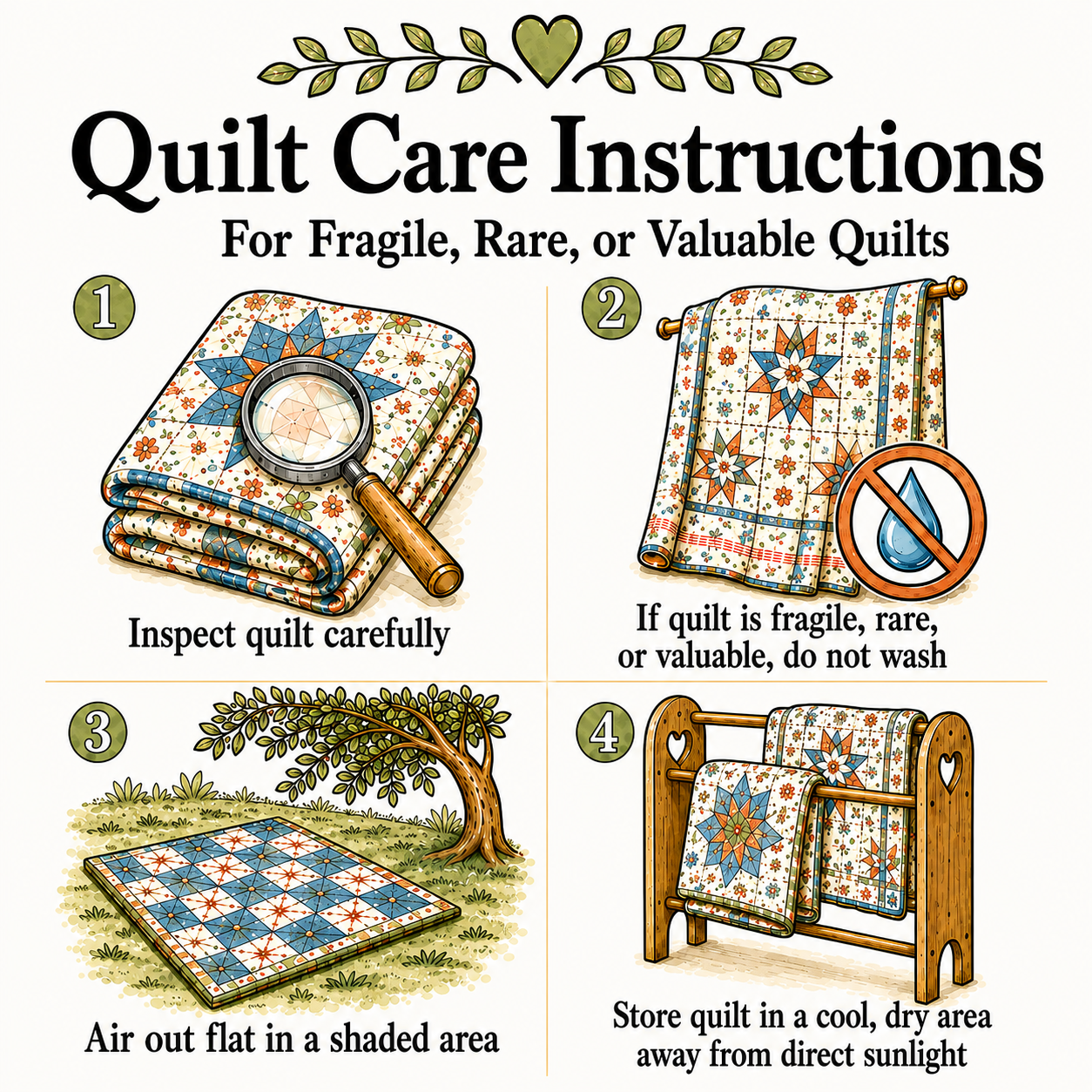
Fragile, rare, and valuable quilts require especially gentle care. Age, weakened fabrics, delicate stitching, unstable dyes, and years of use can make an older quilt more vulnerable to damage from washing, handling, light, and improper storage.
When a quilt is particularly fragile, historically significant, valuable, or irreplaceable, the goal should be preservation rather than cleaning. In many cases, the safest choice is not to wash the quilt at all. Conservation guidance likewise recommends consulting a textile conservator before wet cleaning prized or delicate quilts.
Inspect the Quilt Carefully
Before cleaning, displaying, or storing an older quilt, examine both the front and back in good lighting. Look for weakened or thinning fabric, tears, loose seams or stitching, exposed batting, fragile appliqué or embellishments, discoloration, mold, pest damage, and other signs of deterioration. Quilts containing delicate materials such as silk or wool may require additional precautions. If the quilt appears fragile or unstable, avoid unnecessary handling and do not attempt to clean it at home.
Do Not Wash Fragile, Rare, or Valuable Quilts
Washing can place considerable stress on older fabrics, stitching, batting, and dyes. Water can also cause unstable colors to bleed or delicate fibers to weaken further. For a fragile, rare, historically significant, or especially valuable quilt, do not machine wash or attempt routine wet cleaning at home. Professional conservation guidance recommends consulting a qualified textile conservator when wet cleaning a prized quilt is being considered.
Commercial dry cleaning should not automatically be considered a safer alternative for an antique quilt. When professional cleaning is necessary, seek someone experienced in the conservation of historic textiles.
Air Out the Quilt Gently
If an older quilt simply smells musty or needs refreshing, washing may not be necessary. Lay the quilt flat on a clean surface in a shaded, well ventilated area and allow it to air naturally. Keep it away from direct sunlight, and avoid beating, shaking, or hanging a fragile quilt where its own weight could strain weakened fabric or stitching. Light exposure can contribute to fading and deterioration of historic textiles.
Store Your Quilt Carefully
Store fragile and antique quilts in a cool, dry area away from direct sunlight. Avoid locations exposed to excessive heat, moisture, or large environmental changes. When possible, store quilts flat or properly supported. If folding is necessary, avoid creating permanent stress along the same fold lines and use appropriate archival materials to cushion and protect the textile. Conservation guidance recommends suitable acid-free tissue for quilts and other flat textiles.
Remember…
With fragile, rare, and valuable quilts, less is often more. Inspect carefully, avoid unnecessary cleaning, keep the quilt out of direct sunlight, handle it gently, and store it properly. The faded fabrics, hand stitching, repairs, and signs of age are part of the quilt’s history and do not need to be removed to preserve it. If a quilt is particularly fragile, valuable, historically significant, or irreplaceable, consult a qualified textile conservator before attempting to clean or repair it.