
IMPORTANT: Before washing, verify that your quilt is sturdy, washable cotton and is not fragile, rare, or especially valuable. If you are unsure, follow our care guide for fragile, rare, or valuable quilts instead.
A well-made cotton quilt can last for generations with thoughtful care. Whether your quilt is handmade, inherited, or a special vintage find, gentle washing, careful drying, and proper storage can help protect its fabric, stitching, colors, and shape.
BEFORE WASHING ANY QUILT, MAKE SURE IT IS TRULY STURDY ENOUGH TO BE WET CLEANED. A quilt that is fragile, damaged, rare, historically significant, especially valuable, or irreplaceable should NOT be treated like an everyday washable cotton quilt.
If you are unsure whether your quilt is safe to wash, err on the side of caution and do not get the quilt wet. Read our How to Care for Fragile, Rare, or Valuable Quilts guide before proceeding.
Inspect Your Quilt Before Washing
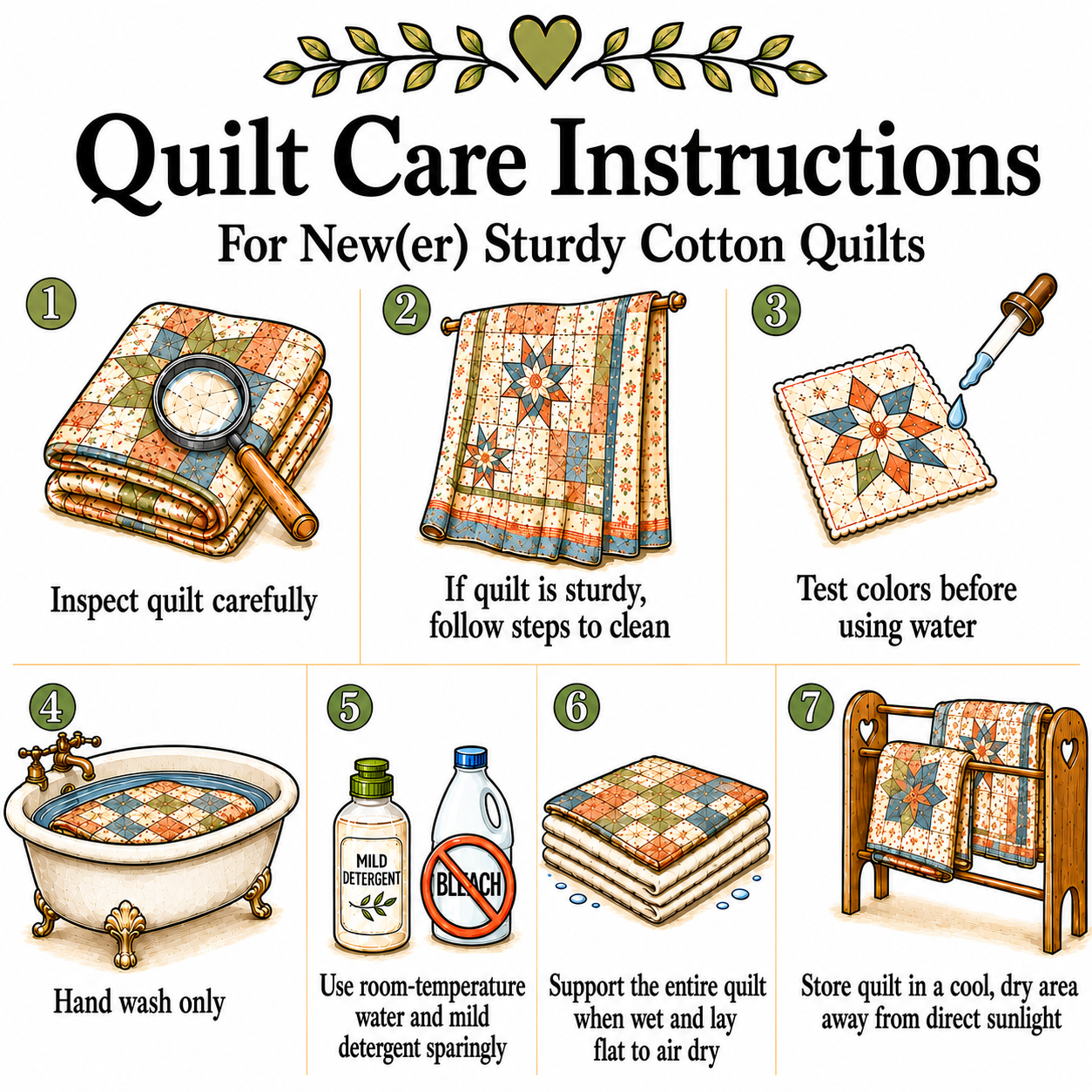
Before using water, spread the quilt on a clean, flat surface and carefully inspect both the front and back. Make sure the fabric and stitching are strong and intact. Look for tears, thinning fabric, loose seams, broken stitches, exposed batting, delicate embellishments, or other areas that may be damaged by washing.
Also consider what you know about the quilt’s age, materials, history, and value.
If the quilt appears fragile, rare, especially valuable, or irreplaceable, stop here and do not wash it. Follow the care recommendations in our How to Care for Fragile, Rare, or Valuable Quilts guide instead. Textile conservation guidance specifically advises against washing fragile or deteriorating textiles.
Test the Colors Before Using Water
Even a sturdy cotton quilt can contain dyes that bleed when wet. Before washing the entire quilt, test a small, inconspicuous area with plain water and gently blot it with a clean white cloth. If color transfers onto the cloth, do not continue with wet cleaning. Testing is especially important when you do not know the quilt’s age, fabric source, or previous care history.
Hand Wash Gently
If the quilt is sturdy, washable cotton and has passed your inspection and color test, fill a clean bathtub or other large container with room temperature water. Gently lower the quilt into the water, allowing it enough room to rest without being tightly folded or compressed. Do not scrub, twist, wring, pull, or aggressively agitate the quilt. If detergent is needed, use only a small amount of mild detergent. Avoid bleach, harsh stain removers, and aggressive spot treatments.
Rinse Carefully
Drain the wash water while leaving the quilt supported in the tub or container. Refill with clean water and gently rinse until detergent residue has been removed. A wet quilt can become surprisingly heavy. Never lift a saturated quilt by its corners or edges. Support as much of the entire quilt as possible whenever it must be moved. Safe handling guidance for wet textiles similarly emphasizes supporting the textile and drying it flat rather than allowing its wet weight to place stress on weakened areas.
Lay Flat to Air Dry
After rinsing, allow excess water to drain without wringing or twisting the quilt. Lay the quilt flat on a clean, protected surface and use clean white towels to gently absorb excess moisture. Allow the quilt to air dry completely in a shaded area with good air circulation. Avoid direct sunlight while drying, and do not fold or store the quilt until the fabric and batting are completely dry.
Store Your Quilt Carefully
Once completely dry, store your quilt in a cool, dry area away from direct sunlight and excessive heat or moisture. Avoid leaving a quilt folded along the exact same lines for long periods. Properly supporting or periodically refolding a stored quilt can help reduce stress from permanent creases. Conservation guidance also recommends protecting quilts from light and using appropriate storage methods rather than simply stacking or tightly folding them.
Remember…
The most important step happens before the quilt ever touches water. First make SURE your quilt is sturdy, washable cotton and is not fragile, rare, historically significant, especially valuable, or irreplaceable. Then remember: Inspect carefully. Test the colors. Hand wash gently. Use room temperature water and mild detergent. Support the quilt when wet. Lay flat to air dry. Store away from direct sunlight.
When there is ANY doubt about whether a quilt should be washed, choose caution and follow our How to Care for Fragile, Rare, or Valuable Quilts recommendations instead.